


Cape Town has an incredible amount to offer the curious traveller. Beyond its beaches, mountains, vineyards and restaurants, the city has a rich creative culture, and when it comes to theatre and the performing arts, it is undoubtedly one of South Africa’s leading cities.
The Artists Shaping South Africa's Culture Scene
Posted on Thu October 22, 2026.
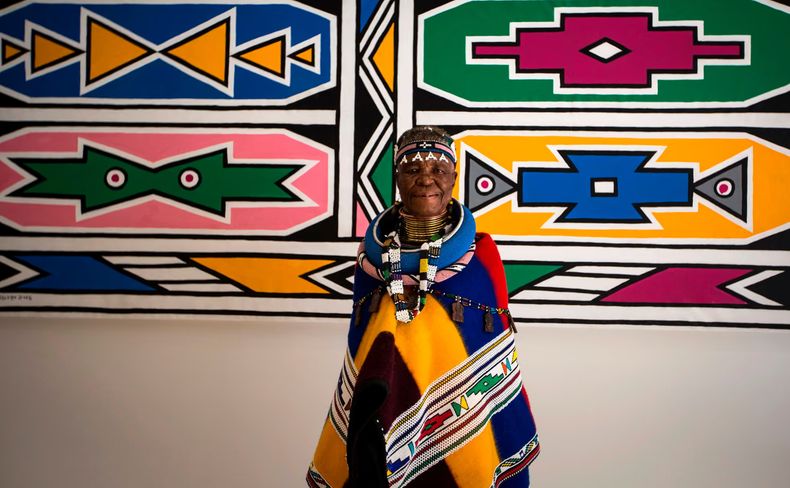
South African art has a voice all of its own. It is shaped by the country’s landscapes, cultures, politics, history and people, but it isn’t defined by them alone. From Ndebele-inspired geometric patterns and depictions of life in the country’s townships to photography, sculpture, animation and contemporary installations, South African artists have created works that tell stories both about the country they come from and about a world far beyond its borders.
Some of these artists are internationally celebrated. Others are still making their mark. What unites them is their ability to tell stories, challenge perspectives and help us see South Africa a little differently.
William Kentridge
If there’s one South African artist you should know, it’s William Kentridge. Born in Johannesburg, Kentridge works across drawing, animation, film, theatre, opera and sculpture, often exploring history, politics, memory and the contradictions of South African society.
His celebrated charcoal animations are particularly distinctive, with drawings repeatedly erased and redrawn to create movement. His work can be serious and political, yet it also carries a strong sense of humour, theatricality and playfulness.
Kentridge’s work has been exhibited at some of the world’s leading museums and can also be experienced in Cape Town, including at Zeitz MOCAA and Norval Foundation.
Dr Esther Mahlangu
You might recognise Esther Mahlangu’s work before you recognise her name. Her bold geometric patterns, vibrant colours and instantly recognisable visual language have travelled far beyond South Africa, appearing on everything from cars and aeroplanes to fashion, architecture and international collaborations.
Mahlangu began learning the traditional decorative art of the Ndebele people from her mother and grandmother at the age of ten. She transformed patterns traditionally used to decorate Ndebele homes into a contemporary artistic language that has found its place on the international art scene.
Her work is colourful, but there’s much more to it than colour alone. It represents the preservation, evolution and international recognition of an important artistic heritage.
Dylan Lewis
Dylan Lewis is one of South Africa’s best-known sculptors, particularly recognised for his powerful depictions of animals and the natural world. Raised in an artistic family, he began his career as a painter before turning to sculpture and building an international reputation.
His sculptures frequently explore the relationship between humanity and the wilderness, with big cats and other animals serving as recurring subjects. More recently, the human form and the idea of an inner wilderness have also become increasingly prominent in his work.
His sculptures can be experienced in a particularly beautiful setting at the Dylan Lewis Sculpture Garden in Stellenbosch, where more than 60 works are positioned along several kilometres of paths through an indigenous garden.
Zanele Muholi
Zanele Muholi approaches art as a form of visual activism. Through photography and other media, Muholi’s work has created an important visual record of the lives of Black LGBTQIA+ people in South Africa and elsewhere, while challenging invisibility and celebrating identity, dignity and beauty.
The long-running photographic series Faces and Phases documents members of Africa’s LGBTQIA+ community, while Somnyama Ngonyama uses powerful self-portraits to explore race, identity, representation and history.
Muholi’s art asks you to look, but more importantly, to truly see. It is personal, political and deeply human.
Gerard Sekoto
Gerard Sekoto is one of the most important pioneers of South African modern art. Born in 1913, he became known for his paintings depicting the lives of Black South Africans in urban settings, creating a visual record of a time when Black artists were largely excluded from the established South African art world.
His paintings captured township life, people, streets and everyday moments, often through a distinctive use of colour and an expressive visual style. He later moved to Paris, where he lived in exile and continued his artistic career.
Today, Sekoto remains an important part of the story of South African art and the country’s evolving understanding of its own artistic history.
Irma Stern
Irma Stern holds an important place in South African art history, known for her vivid paintings, portraits, still lifes and landscapes. Born in 1894, she travelled extensively and drew inspiration from both Europe and Africa, developing a bold, colourful and highly personal style.
Her former home in Cape Town is now the Irma Stern Museum, where visitors can experience her art in the setting in which much of it was created.
It’s a lovely reminder that sometimes, understanding an artist takes more than simply standing in front of a painting. Sometimes, you need to step into their world.
Nelson Makamo
Nelson Makamo belongs to a younger generation of South African artists who have taken local stories onto the international art scene. His paintings and drawings often focus on everyday life, particularly the people and experiences found in South African communities.
His work is energetic, expressive and full of movement, often featuring vivid colours and loose, gestural brushstrokes. There’s an optimism running through much of his art, alongside a strong sense of place and identity.
Makamo’s international recognition is a reminder that contemporary South African art isn’t simply looking backwards. It is actively taking part in the global conversation about art.
The South African Art Story Is Still Being Written
These artists represent just a small part of South Africa’s extraordinary creative landscape. Generations of artists reflect the country’s history through their work, while emerging voices explore what South Africa is becoming.
That’s what makes the art scene so exciting to discover. You’re not just looking at paintings, photographs or sculptures. You’re encountering different interpretations of a country that has never been easy to define.
And perhaps that’s the best reason to see South Africa through the eyes of its artists. You might see the country differently by the time you leave.
Further Reading
Take Your Seat in the Audience: Theatre & Performing Arts in Cape Town
Thu October 22, 2026
Read This Article
When South Africa Celebrates: Festivals & Major Events Worth Travelling For
Thu October 22, 2026
Read This Article
South Africa really knows how to throw a party. From music festivals in the bush and art gatherings in the desert to colourful street carnivals, food festivals and some of the continent’s biggest events, the calendar is packed with reasons to travel.
Pack Light, Shop Local: South African Beauty Brands We Love
Thu October 22, 2026
Read This Article
South Africa has plenty of international beauty brands, but some of the products we love most are actually made right here at home. From beautifully formulated skincare to natural body products and gentle essentials for little ones, there’s a growing range of South African beauty brands worth discovering.
Share This Post