


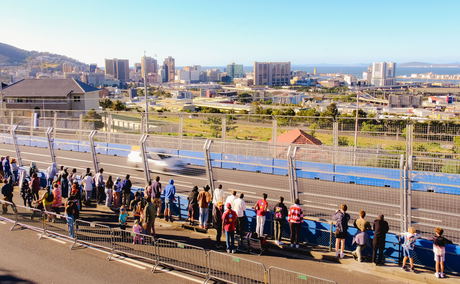
Cape Town never sleeps. I swear, every week there’s something happening, a random event, a festival, a parade, a race, a concert, or something totally unexpected. And somehow, I always end up in the middle of it.
Touring the Western Cape (part 1)
Posted on Wed November 19, 2025.
During the past few weeks, all I’ve been writing about is Cape Town (makes sense, because I live here ;)). But the last two weeks have been a little different. I got to follow along on a group trip, led by Jonas, through the Western Cape, and all I have to say is “wow”. Every time I think I’ve seen “enough” of this place, it surprises me again. The more I explore, the more I want to stay. There’s just so much to do, so much to learn, and so many corners that make you stop and go, “Okay, this is unreal.”
Township of Khayelitsha and Philani
We started the trip with a visit to Philani Maternal, Child Health and Nutrition Project, located in the township of Khayelitsha. What is Philani? Good question! Let me tell you, because what they do is something that made me think twice about how different life can be. Philani supports mothers and children who face challenges many of us never even think about. Their main focus is making sure mothers are healthy, babies are growing, and families have the knowledge they need to build a better future. They work with something called “mentor mothers” who are local women trained to support families, especially pregnant women, in their own neighbourhoods. These women walk from house to house, checking on newborns, teaching about nutrition, helping mothers through pregnancy, and guiding families through difficult situations.
So what did I actually visit? Yet again! Good question! We went to a school run by Philani, and we got to hear about their curriculum, how they blend early education with play, creativity, and emotional support. They also have a huge focus on nutrition, so every child gets meals that help them grow strong and healthy, something that doesn’t always happen at home. We got to see their classrooms, meet the children, and the teachers. The kids were laughing, pointing, and waving at us with big, curious eyes, since they aren't used to seeing white people. After visiting the school, we went to their craft store filled with handmade stuff created by local mothers, and every purchase directly supports the women who make them.

All in all, this visit made me reflect on how different our lives can be, simply because of where and how we grow up. And one thing I started to think about was the things I’ve always taken for granted, for instance, access to healthcare, education, safety, and even just stability. And what touched me the most was their strength, pride, and the way they talked about their work and experiences was not with sadness, but with hope and confidence. It was an eye-opening experience in the best way possible, and it made me admire these women who are literally changing lives one home visit at a time.

Cape Peninsula & Bo-Kaap
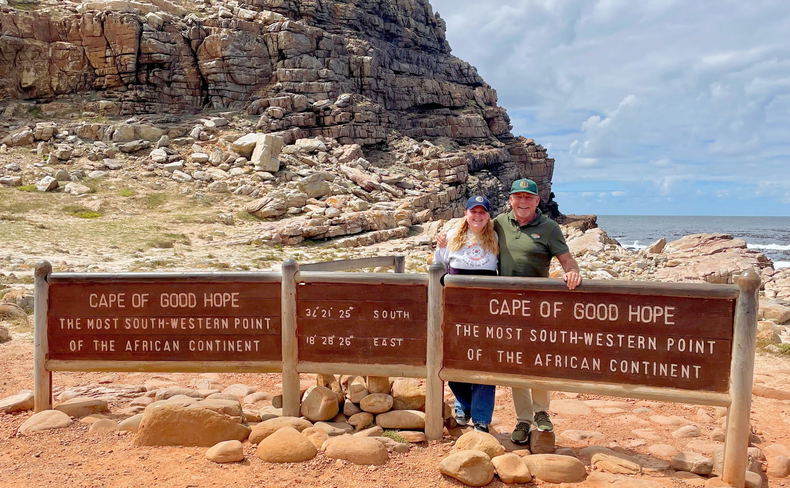
A trip to Cape Town without visiting the Cape Peninsula and the Cape of Good Hope isn’t really a visit to Cape Town at all, right? Or, well, so I have heard! So the next day, we set out on a day tour to Cape Point Nature Reserve, got to stand by the Cape of Good Hope sign, and, of course, met the penguins. And yet again, Jonas taught me so much, and I think he enjoys being my personal Google. I learned more about the nature surrounding Cape Town, history, animals, and all the hundreds of flowers growing here. I will say that every time I go anywhere with Jonas, my notebook fills up and I get to learn so, so, so much.
The next day, we visited Bo-Kaap, the colourful neighbourhood you’ve probably seen on Instagram. We had a short walking tour and learned why the houses are so bright (quick fact: the tradition of painting them started when freed slaves celebrated their new freedom by coloring their homes). After the tour, we visited a local family who taught us how to cook Cape Malay cuisine.

!Khwa ttu & Paternoster
Our journey then continued up the coast toward Paternoster, and on the way, we stopped at the cultural center and nature reserve !Khwa ttu. Here we had lunch and learned about the San people, one of the world’s oldest indigenous groups. Their language includes clicking sounds, and their ancient rock art can still be found all over Southern Africa.
In Paternoster, we stayed at Gonana Guesthouse, which Jonas built, designed, and created. (I know, quite impressive.) It’s the first sustainable guesthouse in the area, completely eco-friendly, and literally right on the beach. Sounds like the dream, right? The rooms open directly toward the ocean, and the whole place feels calm and natural, like it’s part of the landscape rather than just placed on it. Upon arrival, I went for a long beach walk, enjoyed the wind in my hair, and we had dinner at Voorstrandt, a beachside restaurant set inside a red-and-green tin house, the only non white painted house in the area.

The next day, we explored West Coast National Park. We spotted snakes, ostriches, a Cape clawless otter, and more animals along the way. We had a picnic by the lagoon, and the view was pretty beautiful with blue water, white sand, and birds. We ended the evening at De See Kat, where the sushi was so good I’m still thinking about it.

Wine Region
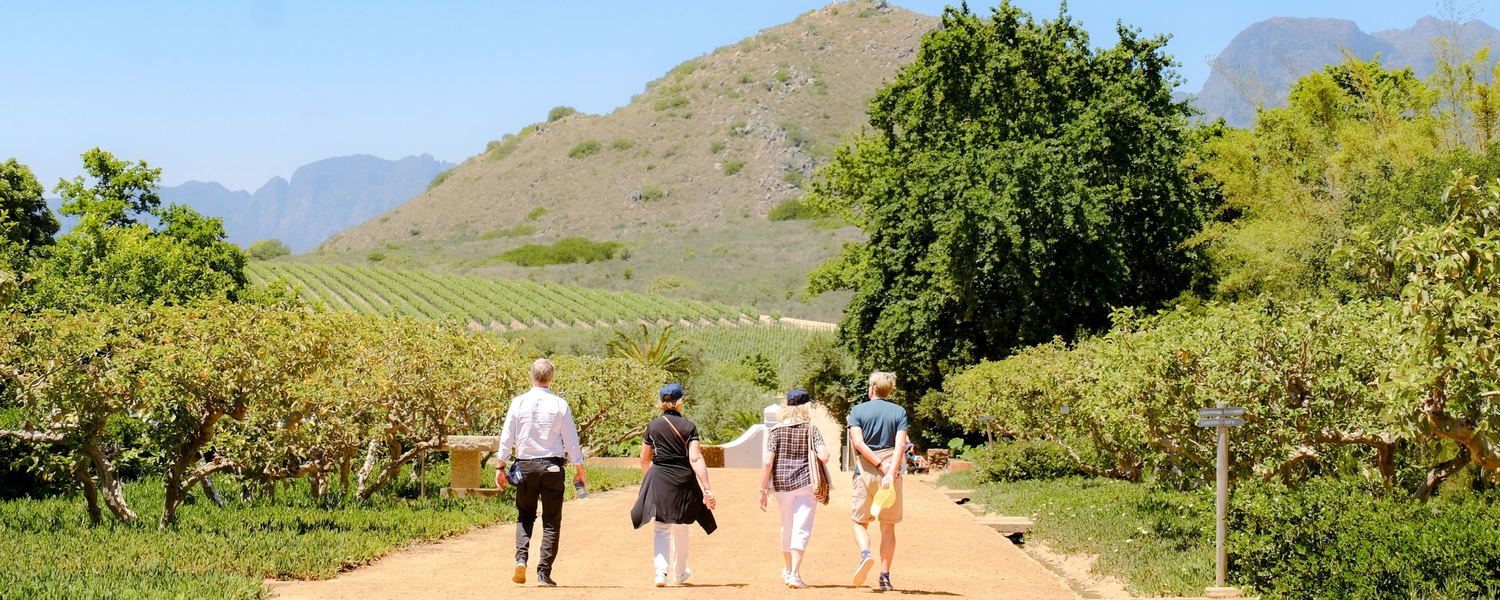
Then we turned inland and entered wine country (always a good idea). Our first stop was Babylonstoren, famous for its gardens. And not just small gardens, think huge, beautifully designed spaces full of fruits, vegetables, herbs, and small animals. We wandered around and had lunch in their Greenhouse Restaurant. After that, we continued to Stellenbosch, checked into our hotel, and had dinner at The Fat Butcher, which is well known for its dry-aged meats.
The next morning, we visited Boschendal, one of the oldest wine farms in the country. Besides making great wine, the estate is known for its mountain views, gardens, and farm-to-table philosophy. We had a wine tasting and then enjoyed a picnic lunch under the trees. Our wine journey continued to Haute Cabrière in Franschhoek, known for its Cap Classique (South Africa’s version of champagne). The estate sits on a slope with a spectacular view of the valley, and its cellar is built into the mountain. Pretty impressive estate, that's for sure. After all the tastings, we headed back to our hotel, happily tired.

To Be Continued…
And that was Part 1 of the trip! Pretty amazing, right?
If I wrote everything in one post, it would turn into a whole book, so I’ll save the rest for next time.
In the next post, I’ll write about the safari and Hermanus, trust me, there’s a lot to tell there too and even more pictures to show.
Further Reading
Raving Through The Winelands
Tue November 25, 2025
Read This Article
Touring the Western Cape (part 2)
Tue November 18, 2025
Read This Article
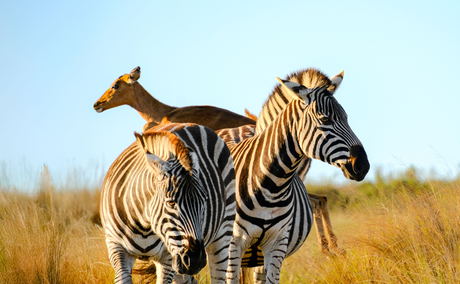
After our wine-filled days in Franschhoek and Stellenbosch, it was time for the next chapter of our trip, and let me tell you, this one did not disappoint. I have to say that every day was full of those “pinch me, is this real?” moments.
On The Top Of Cape Town
Fri November 14, 2025
Read This Article
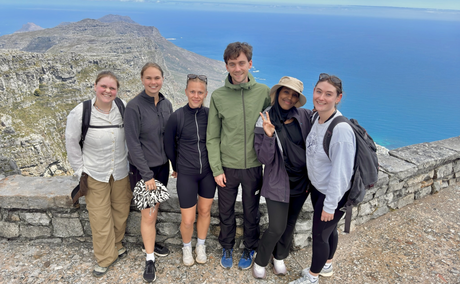
Cape Town has this way of making every adventure feel bigger, brighter, and somehow a little bit magical. Maybe it’s the way the mountain meets the ocean, or how the weather can go from crazy winds to calm sunshine in the span of an hour. Or maybe it’s simply because no matter how many times you explore it, there’s always something new waiting for you. This week’s discovery? The rewarding views from...
Share This Post